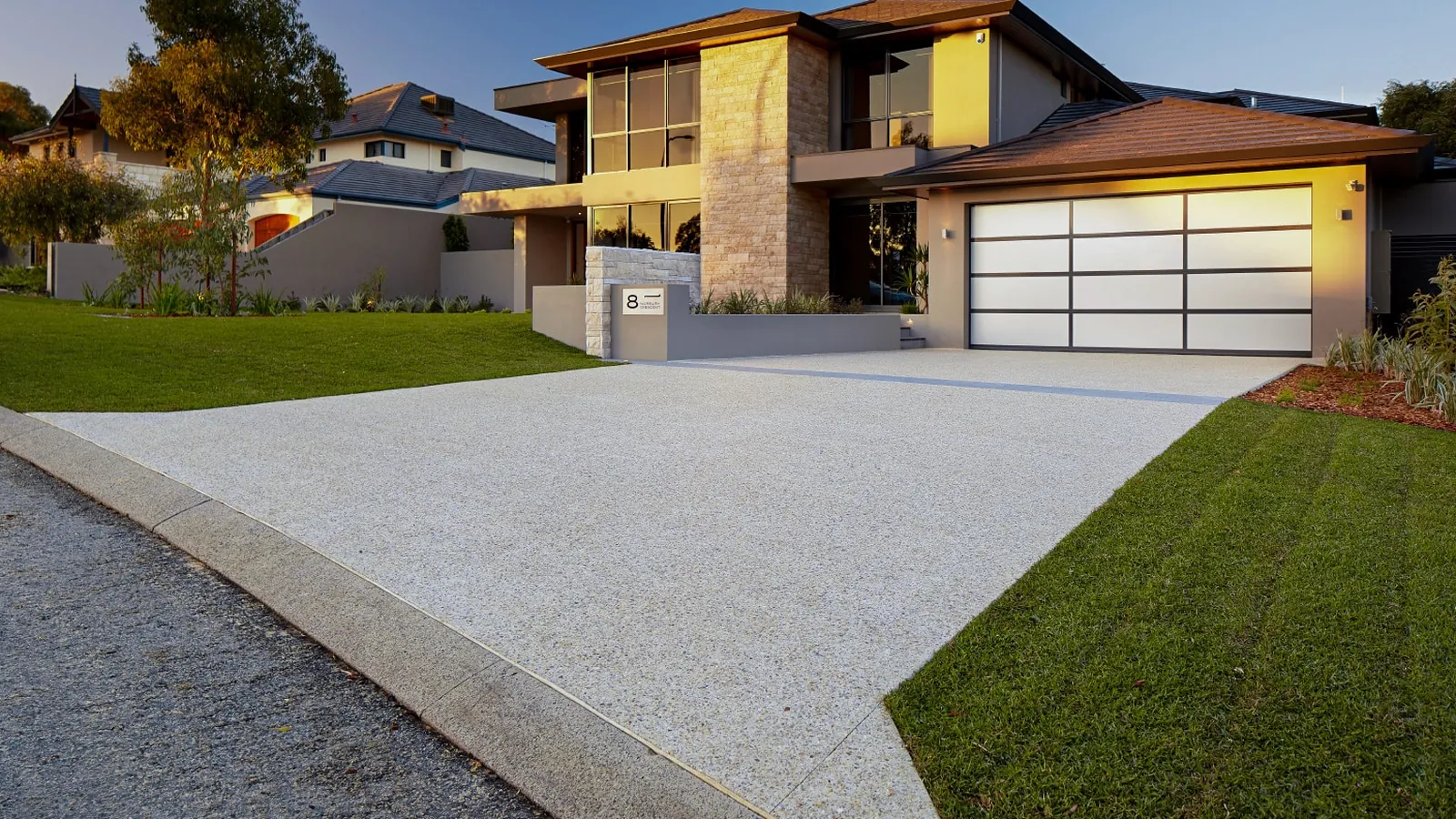
What Goes Into a Concrete Driveway
A concrete driveway looks like a simple poured slab, but a properly built one is closer to a small engineering project — excavated and compacted base, correctly sized reinforcement, the right concrete strength for the load, control joints placed to manage cracking, and careful curing in the days after the pour. Done properly, all of that is close to invisible in the finished result; done poorly, it shows up as cracking, sinking or surface failure within a year or two.
The Process, Step by Step
- Site assessment and quote. We inspect the site, assess soil conditions and existing surfaces, and confirm the right specification and finish for how the driveway will be used.
- Excavation and base preparation. The site is excavated to the required depth and a road-base layer is built up and compacted in stages — the step that determines whether the slab stays flat long-term.
- Formwork and reinforcement. Formwork is set to the correct levels and falls, and reinforcement mesh or bar is laid, sized to the loads the driveway needs to carry.
- Pouring and screeding. Concrete is poured to the correct thickness and screeded level, with fall built in to shed water away from the house.
- Finishing. Depending on the chosen finish, this stage includes brooming, exposing aggregate, stamping a pattern, or applying colour hardener.
- Control joints. Joints are cut or formed at calculated intervals so future shrinkage and movement cracking happens along predictable, clean lines.
- Curing. Curing compound and/or covering is applied and managed over the following days, particularly important in Adelaide's heat, to prevent premature drying and cracking.
Finish Options Explained
The right finish depends more on how the driveway is used and your budget than on looks alone:
- Plain broom finish — the most economical option, still the most common driveway finish in Adelaide
- Exposed aggregate — textured, non-slip, and forgiving of everyday marks, a popular practical upgrade
- Stencil / stamped concrete — the look of pavers or natural stone at a fraction of the cost
- Coloured concrete — integral colour or surface hardener, for a driveway that stands apart from standard grey
See our full comparison of the two most popular decorative finishes in exposed aggregate vs stencil concrete.
What It Costs
Pricing depends heavily on site condition, driveway area and finish — plain broom concrete sits at the more affordable end, while stencil and coloured finishes cost more for materials and finishing labour. For indicative ranges by finish type, see our Adelaide concrete driveway cost guide. The only way to get an accurate number is an on-site assessment.
How Long It Lasts
A properly built driveway — compacted base, correctly sized reinforcement, well-placed control joints and managed curing — typically lasts 25 years or more under normal residential use. Shortcuts in any of those areas are the main reason driveways fail early. Our full breakdown is in how long a concrete driveway actually lasts.
Do You Need Council Approval?
If your driveway crosses the council verge or nature strip to meet the road, most Adelaide councils require a crossover permit or at minimum notification before work starts. We can advise on what your specific council requires as part of the quote process.
Red Flags to Avoid When Hiring
- A quote significantly cheaper than others with no explanation of what's different about the process
- No clear detail on base preparation depth or compaction method
- No mention of reinforcement type or sizing
- No written warranty, or a vague verbal one
- Pressure to book immediately without a proper on-site assessment
A quality driveway comes down to three non-negotiables: properly compacted base, correctly engineered reinforcement, and well-managed curing. Everything else — finish, colour, pattern — matters far less than getting those three right.
Ready to Get a Straight Quote?
We assess every site on-site and explain exactly what it needs — no generic quotes, no shortcuts.
Request a Free Quote