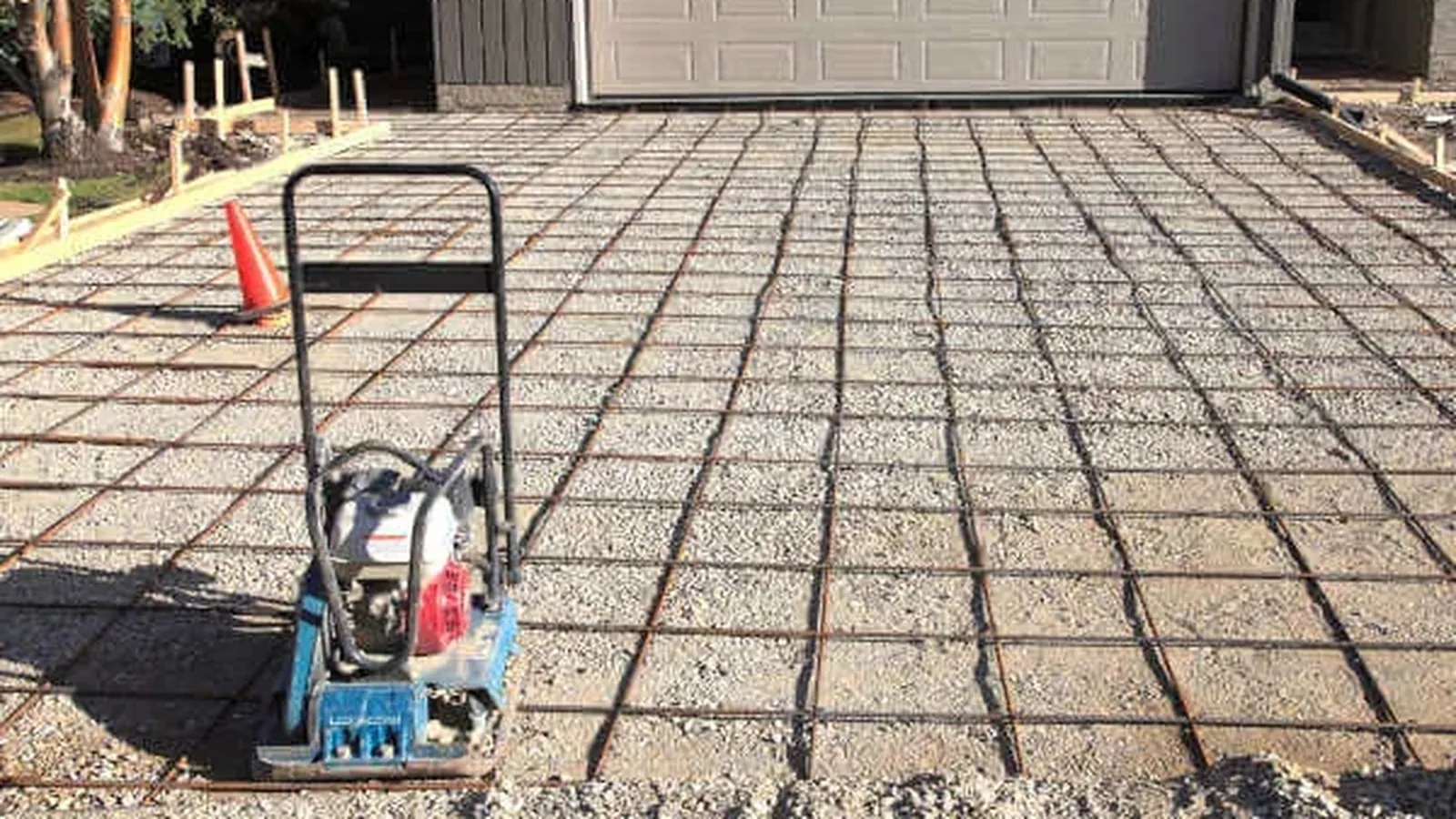
Why Base Preparation Matters More Than the Concrete Itself
It's a strange thing to admit as a concreter, but the concrete mix itself is rarely what separates a driveway that lasts from one that doesn't. What actually determines the outcome is what's underneath it — because a slab can only be as stable as the ground it's poured on. A perfectly mixed, perfectly finished slab poured onto a poorly prepared base will still crack and settle unevenly, often within the first year or two.
What Proper Base Preparation Actually Involves
Base preparation starts with excavating the site to consistent depth, removing any unsuitable material — organic matter, soft or contaminated soil, old debris — that won't provide stable support. A road-base material is then built up and compacted using mechanical plate compactors or rollers, typically in layers rather than one thick lift, since compacting too much material at once doesn't achieve consistent density all the way through. Each layer is compacted to a proper density before the next is added.
Skipping this staged approach — or compacting a single thick layer instead of building it up properly — leaves pockets of under-compacted material beneath the slab. Those pockets settle unevenly over time as the ground is loaded and as moisture moves through it, and that uneven settlement is exactly what causes a driveway to crack or sink in specific spots rather than staying flat.
Why Adelaide's Soil Makes This Even More Critical
Much of the Adelaide metro area sits on reactive clay soil, which expands when wet and contracts when dry through the seasons — a cycle that puts real, ongoing stress on anything poured on top of it. A well-compacted base layer helps manage and distribute that movement more evenly across the slab; a poorly compacted one lets the reactive clay's movement translate directly and unevenly into the concrete above it. This is precisely why we treat base preparation as the priority step on every job, not a formality to get through before the "real" work of pouring concrete begins.
How We Check Compaction Is Actually Adequate
Compaction isn't something you can judge by eye or by how firm the surface feels underfoot — proper compaction is achieved through the right equipment, the right layer thickness, and enough passes to reach adequate density, particularly at the depth that actually matters once a slab is loaded. We don't rush this stage to save time, because it's genuinely the step most likely to determine whether a driveway is still flat and crack-free in fifteen years.
What Happens When Base Preparation Is Skipped
The pattern is consistent across nearly every failed driveway we're called out to assess: uneven settling in specific spots rather than uniform wear, cracking that appears within the first year or two rather than developing gradually over decades, and sunken sections that create pooling water where there shouldn't be any. None of these are really "concrete failures" — they're base preparation failures that took a little while to become visible. See our related article on why concrete driveways actually crack for the full breakdown.
We could offer a cheaper, faster quote by rushing compaction or skipping layers — plenty of operators do. We don't, because it's the single factor most likely to determine whether your driveway is still flat in twenty years or needs replacing in three.
Want the Full Picture on What Your Site Needs?
We'll assess your site's soil and existing conditions before recommending base depth, reinforcement and the right specification for your job.
Get a Free Quote View Concrete Driveways