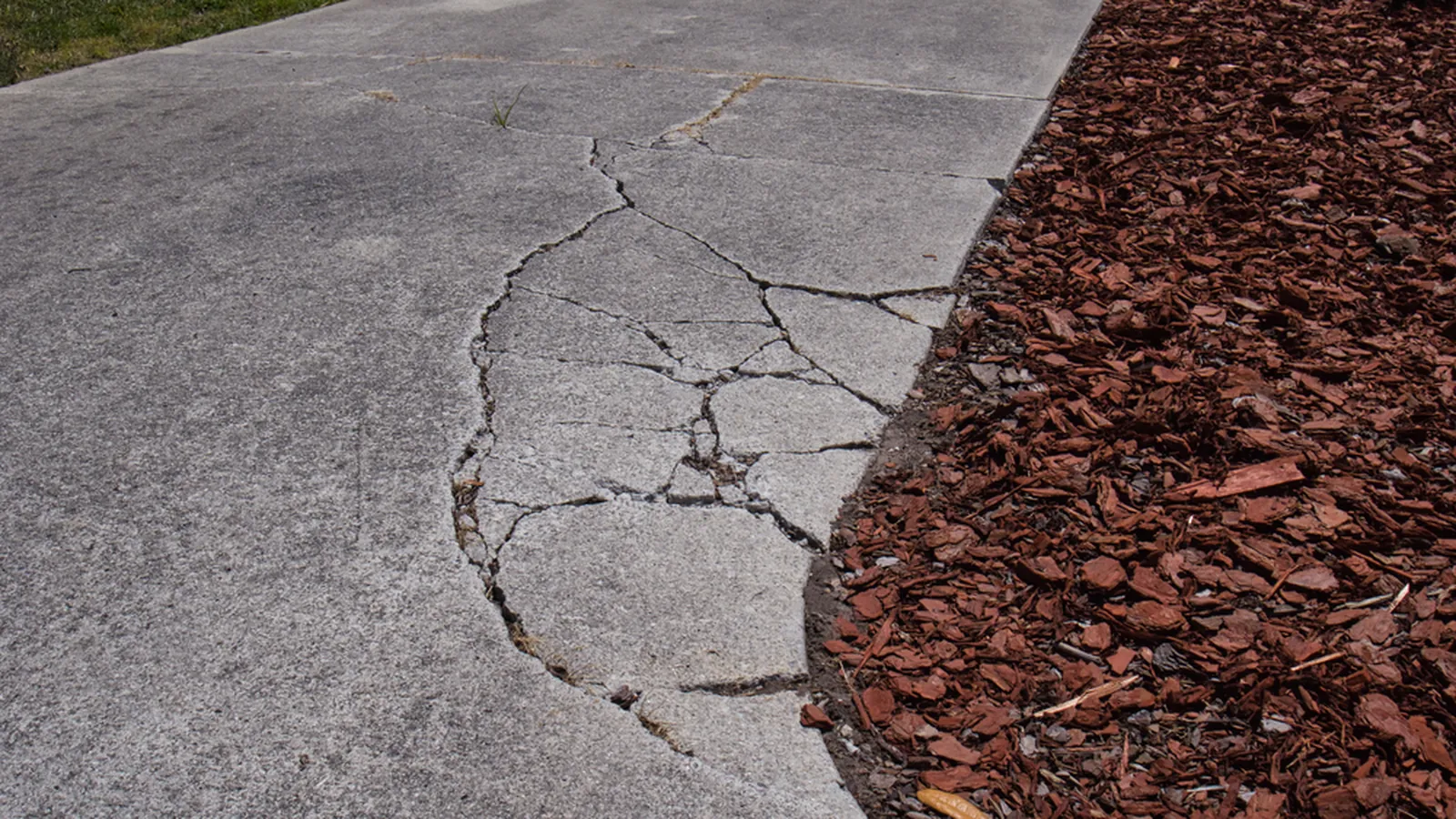
Some Cracking Is Normal — Here's What Isn't
It's worth saying upfront: concrete will always develop some hairline cracking over its life, and cracks running along a control joint are exactly what those joints are designed to do. What we're talking about here is uncontrolled, structural cracking — wide cracks, cracks with one side sitting higher than the other, or cracking spreading across the middle of panels rather than along the joint lines. That kind of cracking is almost always avoidable.
Reason 1: Inadequate Base Preparation
This is the single biggest cause of early failure. A slab poured onto ground that hasn't been properly excavated and compacted in layers is sitting on a foundation that will settle unevenly over time — especially on Adelaide's reactive clay soils, which move seasonally with moisture changes. A driveway can look perfectly fine at handover and start cracking or sinking within the first year or two once the ground beneath it begins to move.
Reason 2: Under-Sized Reinforcement
Reinforcement mesh or bar needs to be sized to the actual load a slab will carry. A driveway specified with light, token reinforcement but regularly carrying a trailer, boat or delivery truck is being asked to do a job it wasn't built for — and the cracking that results isn't a manufacturing defect, it's a specification mistake made before the pour ever happened.
Reason 3: Missing or Poorly Placed Control Joints
Concrete shrinks slightly as it cures and continues to move with the ground beneath it. Control joints are cut or formed at calculated intervals specifically to give that movement somewhere predictable to happen. Skip them, or space them too far apart for the slab's dimensions, and the concrete cracks wherever it's weakest instead — usually in the middle of a panel, which is far more visible and harder to disguise than a clean joint-line crack.
Reason 4: Rushed or Poor Curing
Freshly poured concrete needs to retain moisture as it cures, particularly through Adelaide's hot, dry summer conditions. A slab that's left exposed without curing compound or covering can lose surface moisture too fast, causing plastic shrinkage cracking within the first 24 to 48 hours — before the concrete has developed anywhere near its full strength.
Reason 5: Ignoring Known Soil Conditions
Much of the Adelaide metro area sits on reactive clay soil that expands and contracts with seasonal moisture. A standard-spec slab poured without adjusting for a site's known soil classification is set up to move unevenly from the start — the fix isn't complicated, it just requires actually assessing the site rather than pouring a generic slab everywhere.
How to Spot a Dodgy Operator Before You Hire Them
A few direct questions at quote stage will tell you a lot:
- "What base preparation is included, and how deep does it go?" — a vague answer is a warning sign
- "What reinforcement are you using, and is it sized for what I'll actually park or drive on it?"
- "Where will the control joints be placed?" — a concreter who hasn't thought about joint layout hasn't planned the job properly
- "How do you manage curing, especially in summer?"
- "What's the written warranty, and what does it actually cover?" — a verbal promise isn't the same as a documented warranty
Not every cracked or sunken driveway needs full replacement — see our guide to concrete repairs and crack injection for what an honest assessment and fix actually involves.
Get It Done Properly the First Time
Proper base compaction, correctly engineered reinforcement and managed curing are standard on every job we do — not an upsell, and not a corner we cut.
Get a Free Quote View Concrete Driveways